AI Search Engines are changing the way businesses connect with their audience, making it faster and easier for users to find exactly what they’re looking for. By leveraging intelligent search technology, companies can gain actionable insights, improve engagement, and stay ahead in a competitive digital landscape.
At Bosthelp, we provide website design and development, SEO, and content marketing services. These solutions work together to strengthen your digital presence, attract the right audience, and deliver measurable results that drive growth.
What Makes AI Search Engines Different
The main difference lies in how they work. Generative AI search engines, for example, don’t just find links, they generate summaries and direct answers. Some use large language models to understand complex questions and provide meaningful responses. This means you can ask a detailed question and get a clear, concise answer without clicking through multiple websites.
Benefits of AI Search
AI search engines offer several advantages over traditional search. First, they save time. Instead of scanning dozens of pages, you get summarized answers immediately. Second, many AI search engines provide citations or source-backed information, which makes it easier to trust what you’re reading. Third, they are versatile. Whether you’re researching a topic, coding, or looking for professional insights, AI search engines can adapt to different needs.
Different Types of AI Search Engines
Not all AI search engines are the same. Some focus on research and academic content, offering detailed summaries with references. Others are more conversational, ideal for casual inquiries or brainstorming. Then there are hybrid search engines that combine traditional search results with AI-generated summaries for a more complete picture.
Why You Should Care
Understanding AI search engines is essential if you want to stay ahead in research, learning, or professional work. They can make your searches faster, more accurate, and more efficient. With so many options out there, knowing the basics helps you choose the right AI-powered search engine for your specific needs.
Why AI Search Engines Are Becoming Popular
AI search engines have been gaining popularity quickly, and it’s easy to see why. They are not just another tool they are changing how people search for information and make decisions online.
Fast and Efficient Results
One of the biggest reasons people turn to AI-powered search is speed. Imagine asking a complex question and getting a concise, summarized answer in seconds. You no longer have to sift through dozens of websites to find what you need. AI search engines can quickly provide relevant insights, saving you time and energy.
Smarter, Context-Aware Searches
Unlike traditional search engines that focus on keywords, AI search engines understand the context of your questions. This means you can ask follow-up questions, clarify points, and get answers that adapt to what you’re really looking for. It’s like having a personal research assistant ready at your fingertips.
Popular Among Professionals and Students
AI search is not just for casual users. Students use it to gather research efficiently, while developers and business professionals rely on it for coding help, market insights, and accurate information. Even casual users benefit, whether they’re looking for a recipe, travel advice, or quick facts. The versatility of AI search engines makes them appealing to everyone.
Keeping Information Trustworthy
Many AI search engines, including tools like Perplexity AI and ChatGPT with browsing, provide source-backed answers. This makes it easier to trust the information you get. Users can see where the data comes from, which is especially important for research, professional work, or learning new skills.
Why It Matters for You
Understanding why AI search engines are becoming popular can help you decide how to use them effectively. These tools are designed to make searches faster, smarter, and more tailored to your needs. By embracing AI-powered search, you can gain a significant advantage in productivity, research, and everyday tasks.
Top AI Search Engines Overview
With so many AI-powered tools available, it can be overwhelming to choose the right one. Let’s break down some of the top AI search engines that are leading the way.
ChatGPT with Browsing
ChatGPT has become one of the most popular AI search engines. Its browsing capabilities allow it to provide up-to-date answers from the web, making it useful for research, coding, and everyday questions. Users love it for its conversational style, which makes information easier to understand and follow.
Google Gemini
Google Gemini is Google’s AI-enhanced search platform. It combines traditional search with AI-generated summaries, providing concise, reliable answers. With its focus on real-time web search and source-backed results, it’s a strong choice for professionals, students, and anyone needing accurate information quickly.
Microsoft Copilot / Bing AI
Microsoft Copilot integrates AI into the Bing search experience. It offers summarized answers, interactive prompts, and productivity features that help users find what they need faster. From work tasks to learning new topics, it’s designed to make searches more efficient and context-aware.
Perplexity AI
Perplexity AI focuses on providing source-backed, reliable answers. It’s ideal for research and academic purposes, as it includes citations and references that allow users to verify information. Its clean interface and conversational answers make it easy for anyone to use, whether for school, work, or personal projects.
You.com and Phind
These AI search engines offer unique features like privacy-focused search and specialized tools for developers. They combine AI-generated summaries with traditional results, giving users a well-rounded view of their queries. Phind, in particular, is designed for coding and technical searches, making it a go-to for developers looking for fast and accurate answers.
Why Knowing the Top AI Search Engines Matters
Understanding which AI search engines are leading the field helps you pick the right tool for your needs. Each platform has strengths, whether it’s real-time web results, source-backed answers, or specialized search for coding and research. By exploring these options, you can save time, get reliable answers, and make your searches more productive.
Features to Look for in an AI Search Engine
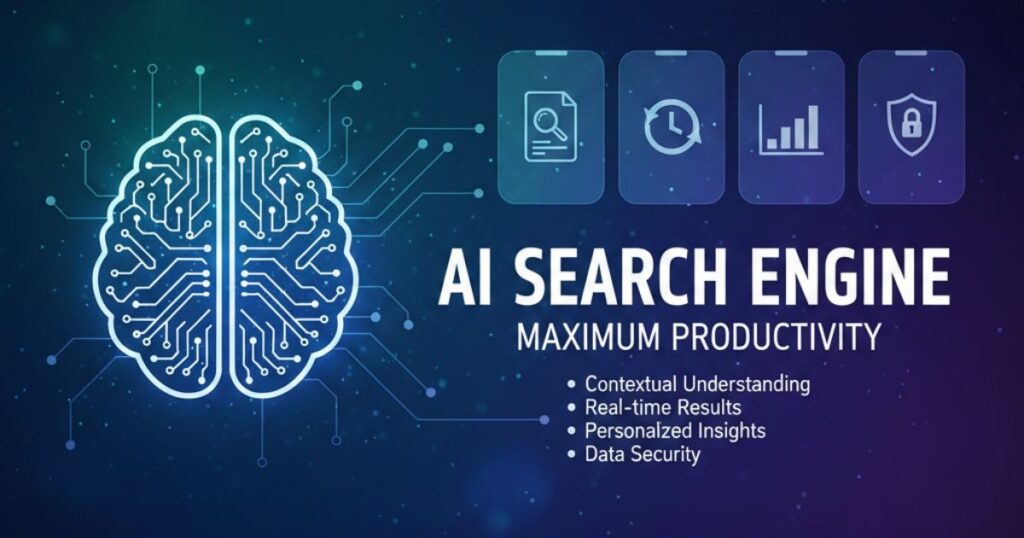
Choosing the right AI search engine isn’t just about picking the most popular one. Understanding the features that make an AI-powered search engine effective can help you find a tool that fits your needs perfectly.
Source-Backed Answers and Citations
One of the most important features is the ability to provide source-backed answers. AI search engines like Perplexity AI and ChatGPT with browsing show references or citations, which lets you trust the information you’re getting. This is especially helpful for research, work, or academic projects where accuracy matters.
Summarization and Direct Answers
AI search engines save time by summarizing information from multiple sources. Instead of reading dozens of web pages, you get a concise answer that tells you exactly what you need to know. This feature is great for students, professionals, or anyone who wants quick and reliable results.
Real-Time Web Access
Some AI search engines can access live web data. This means they provide up-to-date answers instead of relying solely on pre-existing data. Real-time web access is especially useful for topics that change frequently, like technology updates, market trends, or news events.
Specialized Tools for Different Needs
Different AI search engines excel at different tasks. Some are great for coding help, like Phind, while others focus on academic research or enterprise search. Others, like You.com, emphasize privacy and a customizable search experience. Understanding your specific needs helps you pick the best tool.
User Interface and Usability
A clean and intuitive interface makes a big difference. AI search engines that are easy to navigate, with clear menus and simple instructions, help you focus on finding answers instead of figuring out how the tool works. Mobile accessibility and browser integration are also handy features to look for.
Why Features Matter
When you know what to look for, you can choose an AI search engine that fits your workflow and goals. Whether you need fast answers, reliable citations, coding support, or privacy-focused search, understanding these features ensures that your search experience is smooth, effective, and enjoyable.
How to Evaluate AI Search Engine Reliability
AI search engines are powerful tools, but they are not perfect. Knowing how to evaluate their reliability ensures that you get accurate and trustworthy information every time.
Understanding AI Limitations
AI search engines can sometimes give answers that are incomplete or slightly off. This happens because they rely on training data and algorithms that may not always have the latest information. Even popular platforms like ChatGPT with browsing or Perplexity AI can occasionally produce answers that need verification. Understanding this limitation helps you approach AI search results critically.
Fact-Checking and Source Verification
One of the best ways to ensure reliability is to check the sources provided by the AI. Many top AI search engines offer citations or links to original content. By following these references, you can confirm that the information is correct and trustworthy. This is especially important for research, professional work, or academic projects.
Cross-Referencing Multiple AI Tools
Using more than one AI search engine can also improve reliability. For example, you might use ChatGPT to get a quick summary, then verify details on Google Gemini or Perplexity AI. Comparing answers from multiple sources helps reduce the risk of misinformation and gives you a clearer picture of the topic.
Recognizing Hallucinations and Errors
Sometimes AI search engines create “hallucinations,” which are answers that sound plausible but are actually incorrect. Being aware of this phenomenon can save you from relying on false information. If an answer seems questionable, always double-check with reputable sources or official documents.
Why Reliability Matters
Trusting AI search results without verification can lead to mistakes in research, coding, or professional decisions. By learning to evaluate reliability, you ensure that your searches are not only fast but also accurate. Reliable AI search engines combined with careful fact-checking make your work more efficient and credible.
Tips for Using AI Search Effectively
- Look for source-backed answers and citations
- Compare results across multiple AI platforms
- Verify critical information before using it
- Be cautious with complex or sensitive topics
By following these steps, you can use AI search engines confidently and get the most value out of these advanced tools.
Choosing the Right AI Search Engine for You
With so many AI search engines available, picking the right one can feel overwhelming. Understanding your needs and matching them to the right platform makes all the difference.
Match Features to Your Needs
Different AI search engines excel at different tasks. If you need research support with reliable citations, Perplexity AI is a great choice. For coding help and developer queries, Phind stands out. ChatGPT with browsing is excellent for general questions and casual use, while Google Gemini and Microsoft Copilot offer hybrid options that mix AI summaries with traditional search results. Knowing what you need before you start helps narrow your options.
Free vs Paid Options
Some AI search engines offer free access with limited features, while others have paid plans for advanced tools, faster responses, or enterprise capabilities. Free versions are great for casual use or testing the platform, but paid subscriptions can provide more speed, accuracy, and specialized functionality for professionals and businesses.
Trial and Testing
One of the smartest ways to choose an AI search engine is to try a few. Most platforms allow free trials or limited access. Testing multiple engines for your specific tasks lets you see which provides the most accurate answers, fastest responses, and easiest user experience.
Privacy and Security Considerations
It’s important to consider how each AI search engine handles your data. Privacy-focused platforms like You.com ensure that your searches aren’t tracked or sold to advertisers. If you’re working on sensitive topics, this feature can be a deciding factor in choosing the right tool.
Make Your Search Smarter
Choosing the right AI-powered search engine is about more than popularity. Think about your goals, how you plan to use the engine, and which features matter most. By matching your needs to the right platform, you can get reliable answers faster, stay organized, and enjoy a more productive search experience.
Whether you’re a student, professional, or casual user, investing a little time in choosing the right AI search engine will pay off with more accurate answers, better insights, and a smoother online experience.
Conclusion
AI Search Engines are transforming how we find information online by delivering smarter, faster, and more personalized results. By leveraging artificial intelligence and machine learning, these search engines understand user intent, context, and complex queries, offering more accurate and relevant answers. Businesses and users alike benefit from AI search’s predictive, intuitive, and efficient capabilities, shaping the future of online search.
FAQs
An AI Search Engine uses artificial intelligence and machine learning algorithms to deliver smarter, faster, and more relevant search results.
AI Search Engines understand context, user intent, and natural language, whereas traditional engines rely primarily on keyword matching.
They provide personalized results, predictive suggestions, better relevance, and can handle complex or conversational queries.
Yes, businesses can optimize content for AI-powered search, improving chances of appearing in more contextually relevant results.
Yes, AI-powered search features are integrated into popular platforms like Google, Bing, ChatGPT-powered search tools, and enterprise search solutions.